
France
Renaissance | 16th Century
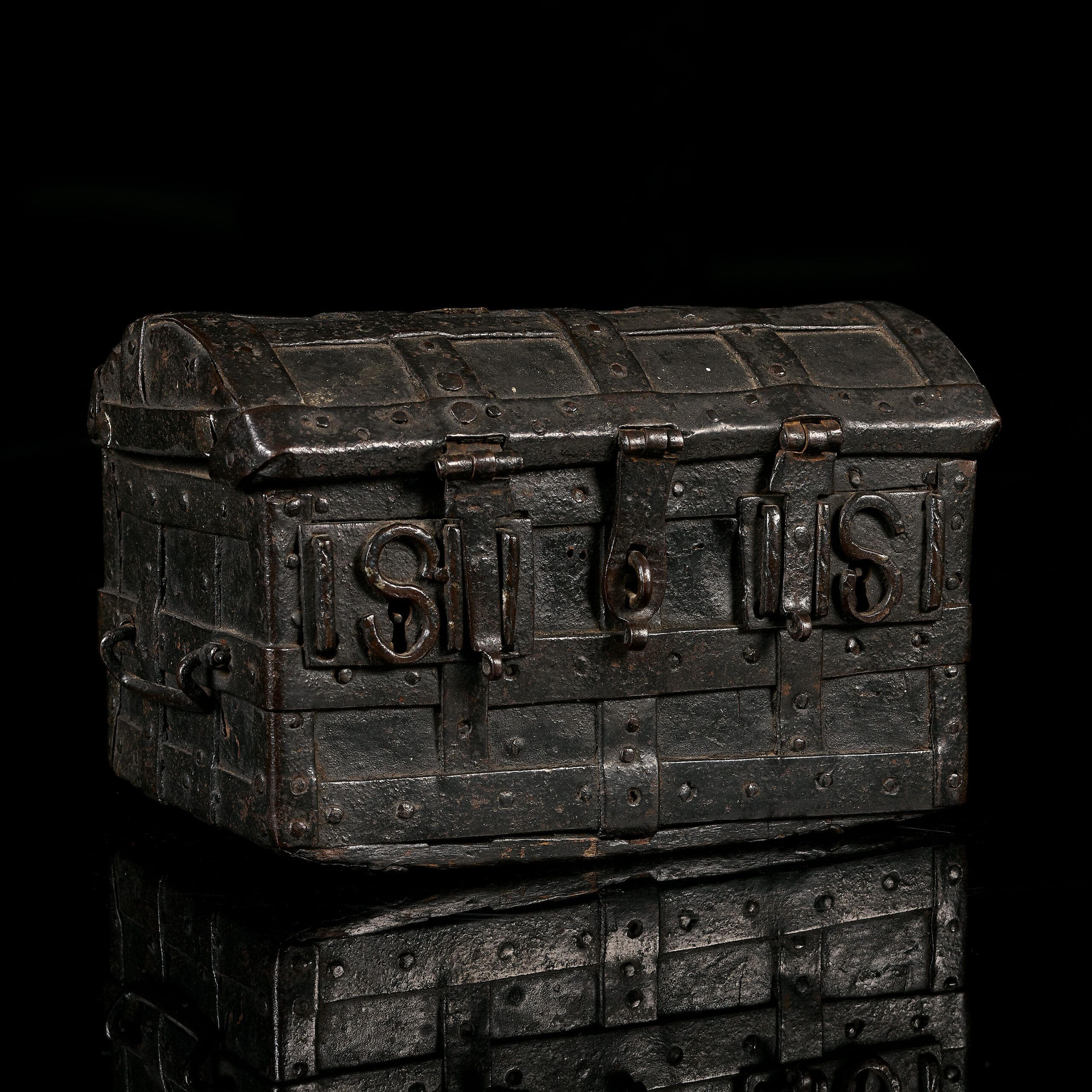
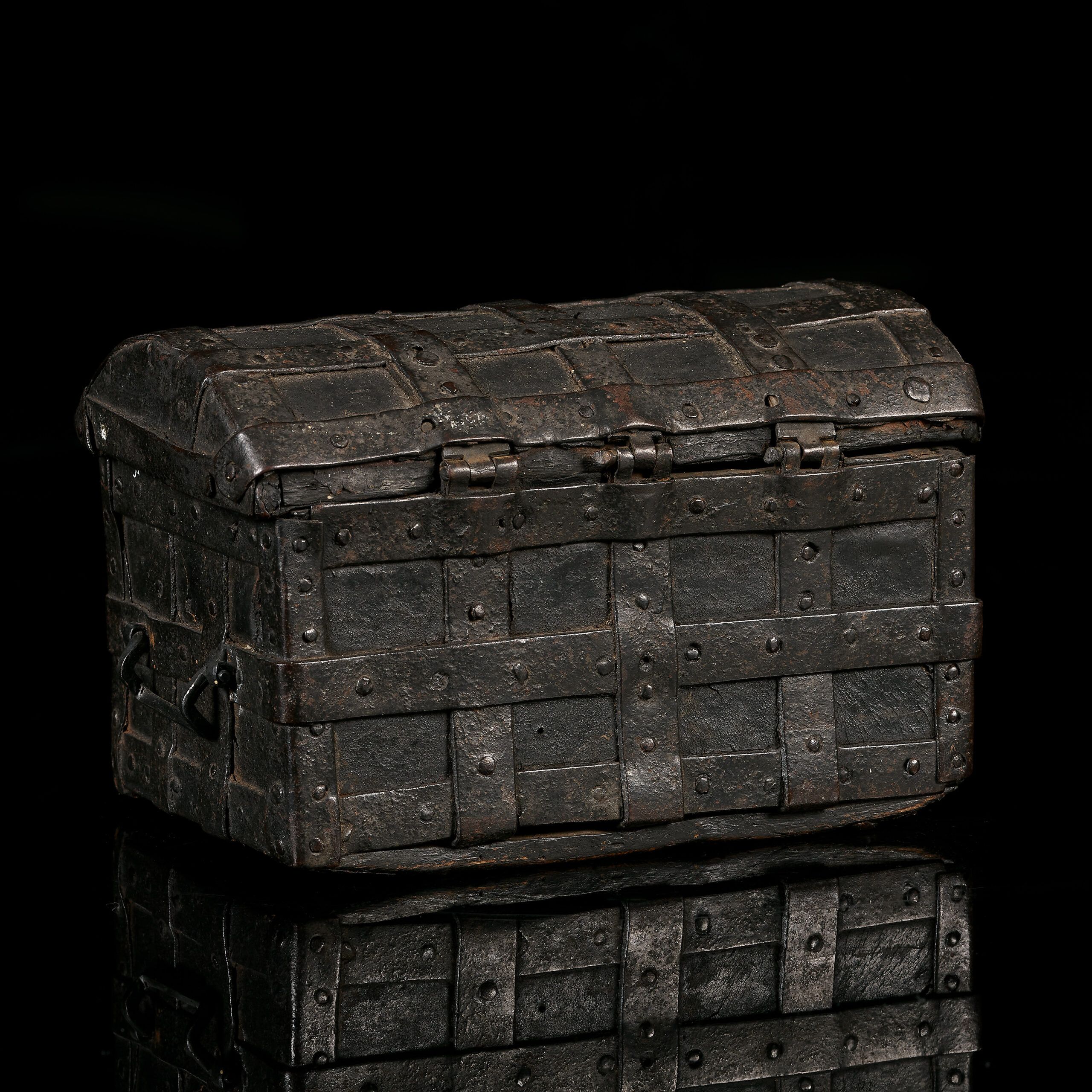
Wooden core, covered with leather and with original wrought iron mounts, hinges and hasps
H. 10,4 cm. W. 17 cm. D. 10 cm.
PROVENANCE
Private collection | The Netherlands
REFERENCE LITERATURE
Lorenzelli, P. & Veca, A. (1984). TRA/E. Teche, pissidi, cofani e forzieri dall’Alto Medioevo al Barocco. Bergamo: Galleria Lorenzelli
CATALOGUE NOTE
This rectangular iron casket follows the design of a miniature chest. It has a wooden core, which is fully covered with black leather and braided iron bands. The bands are attached with wrought-iron nails. The domed lid hinges on three joints and there are two rectangular handles on each side. The casket closes with two built-in iron hinged locks on either side, of which the lock-plate is decorated with an S-shaped scroll. In the middle a third clasp fits into a ring to attach a padlock. The inside of the casket is covered with paper.
Locked chests of various sizes were very popular in the late medieval period and Renaissance. They provided security, privacy and order in upper and middle-class homes. Large boxes stored linens, clothes, kitchenware, and dishes, while small coffers such as this safeguarded money, jewellery, and legal documents.