
Netherlands
First quarter of the 18th Century | Ca. 1700-1710
Oak veneered with ebony, olive, rosewood, purpleheart, bone and various exotic woods
H. 79 cm. W. 103 cm. W. 68 cm.
PROVENANCE
Private collection | United Kingdom
REFERENCE LITERATURE
Baarsen, R. (1993). Nederlandse meubelen, 1600-1800. Zwolle, pp. 56-61
CATALOGUE NOTE
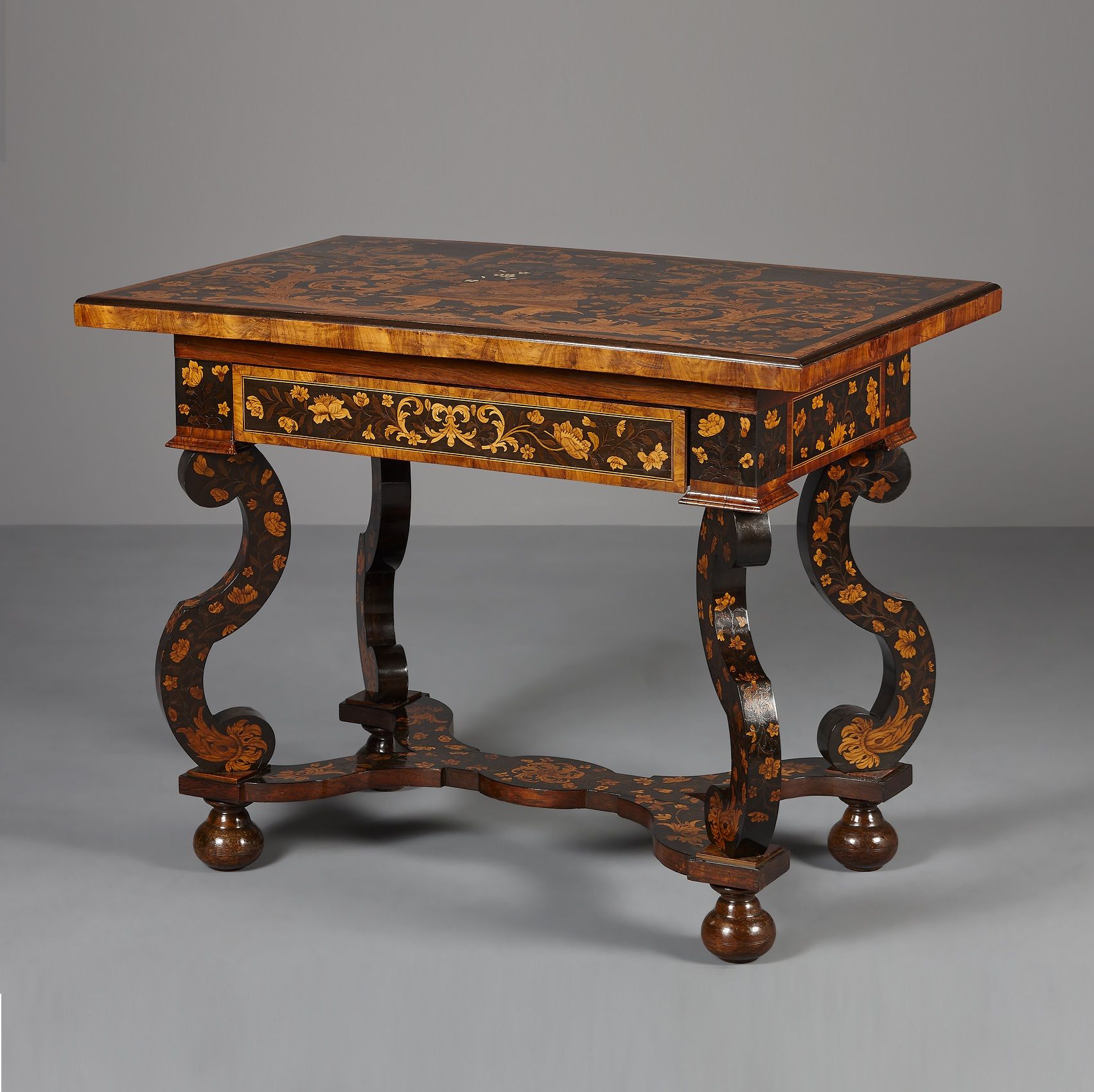
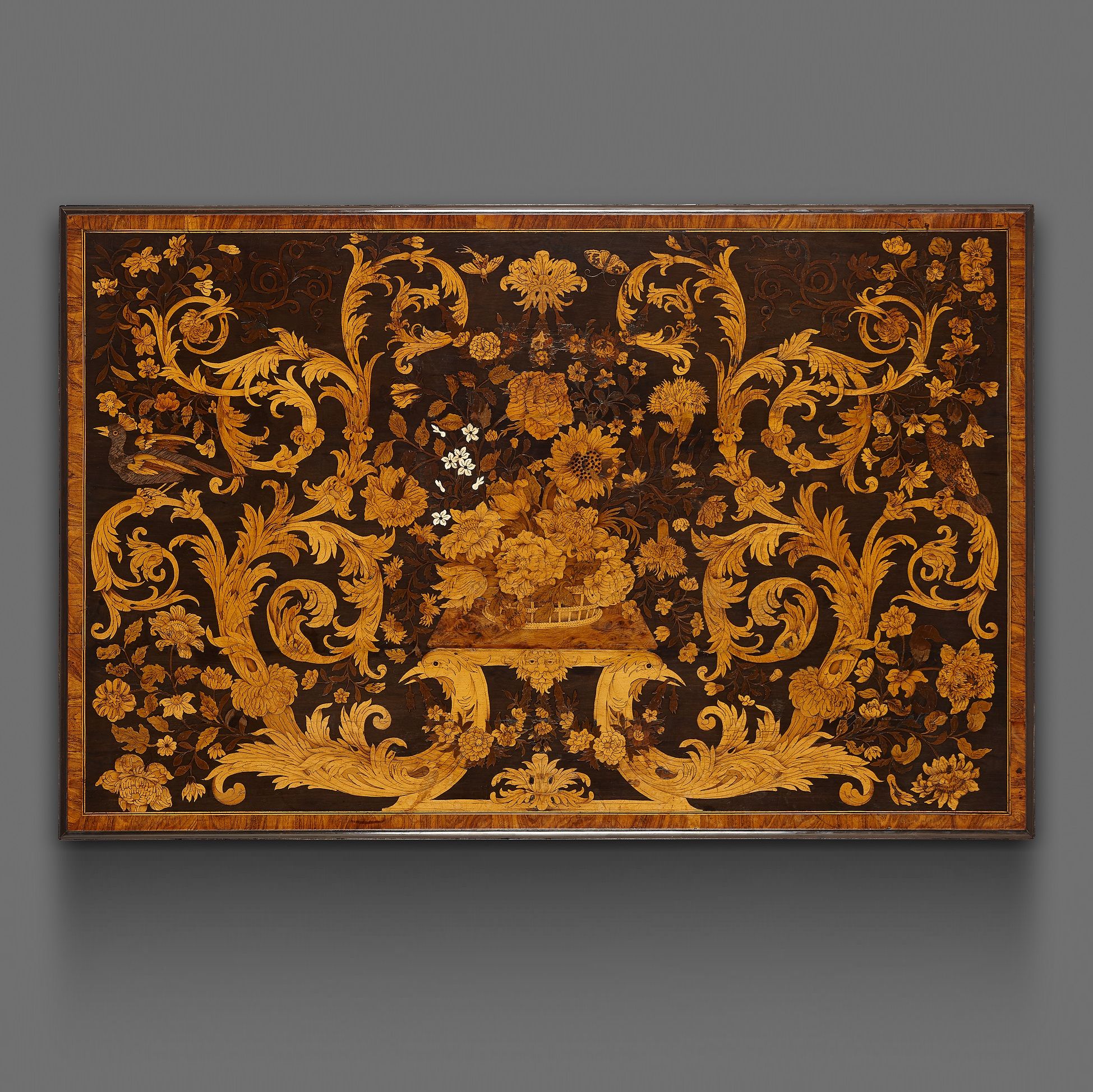
The table is borne by four transversely oriented legs in the shape of S volutes that stand upon ball feet. The legs are interconnected by a mildly undulating, X-shaped stretcher with a central plateau. The legs carry the block, which incorporates a single drawer at the front. The overhanging rectangular top is decorated with extravagant marquetry within a frame. The marquetry of the top seems to depict a marble-topped ‘kwab’ type of table bearing a richly filled floral basket. This representation is surrounded by an elegant pattern of curling acanthus leaves that seems to spring forth from the depicted table’s legs. The pattern itself is decorated in turn with a large variety of flowers, birds and insects. The box, drawer, legs and crosspiece between the legs are also decorated with rich marquetry featuring floral motifs on an ebony background that accentuates the lighter woods of the composition.
The pronounced floral compositions were likely inspired by the graphic works and paintings of Jean Baptiste Monnoyer (Lille 1636 – London 1699). Monnoyer specialised in the portrayal of flower still lifes, often placed in baskets or vases. Considering that he settled in London in 1690, it is no great stretch to assume that his designs readily made their way across the Channel, as the Netherlands and England maintained close relations in that period.