
London, 1593 – Utrecht, 1661
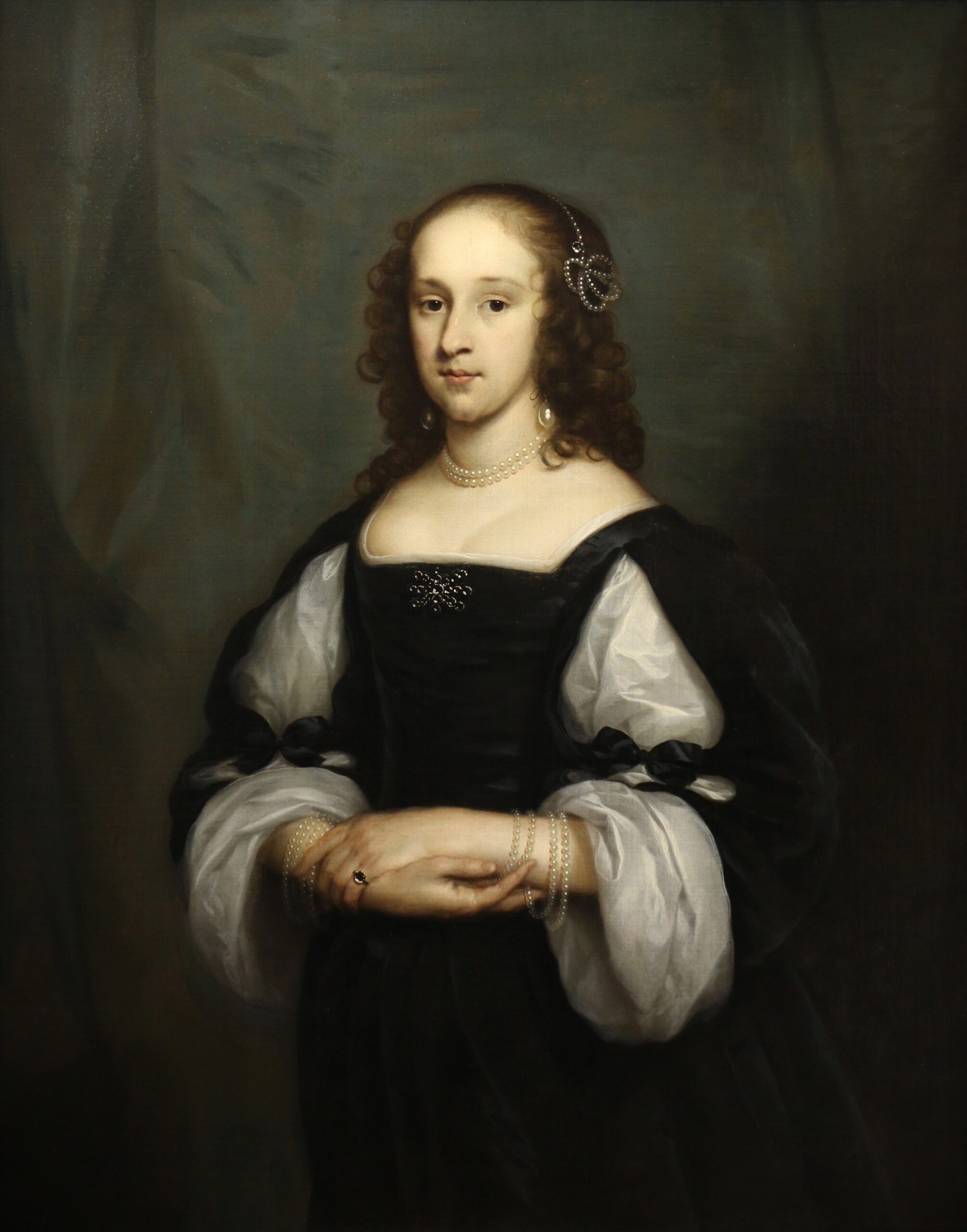
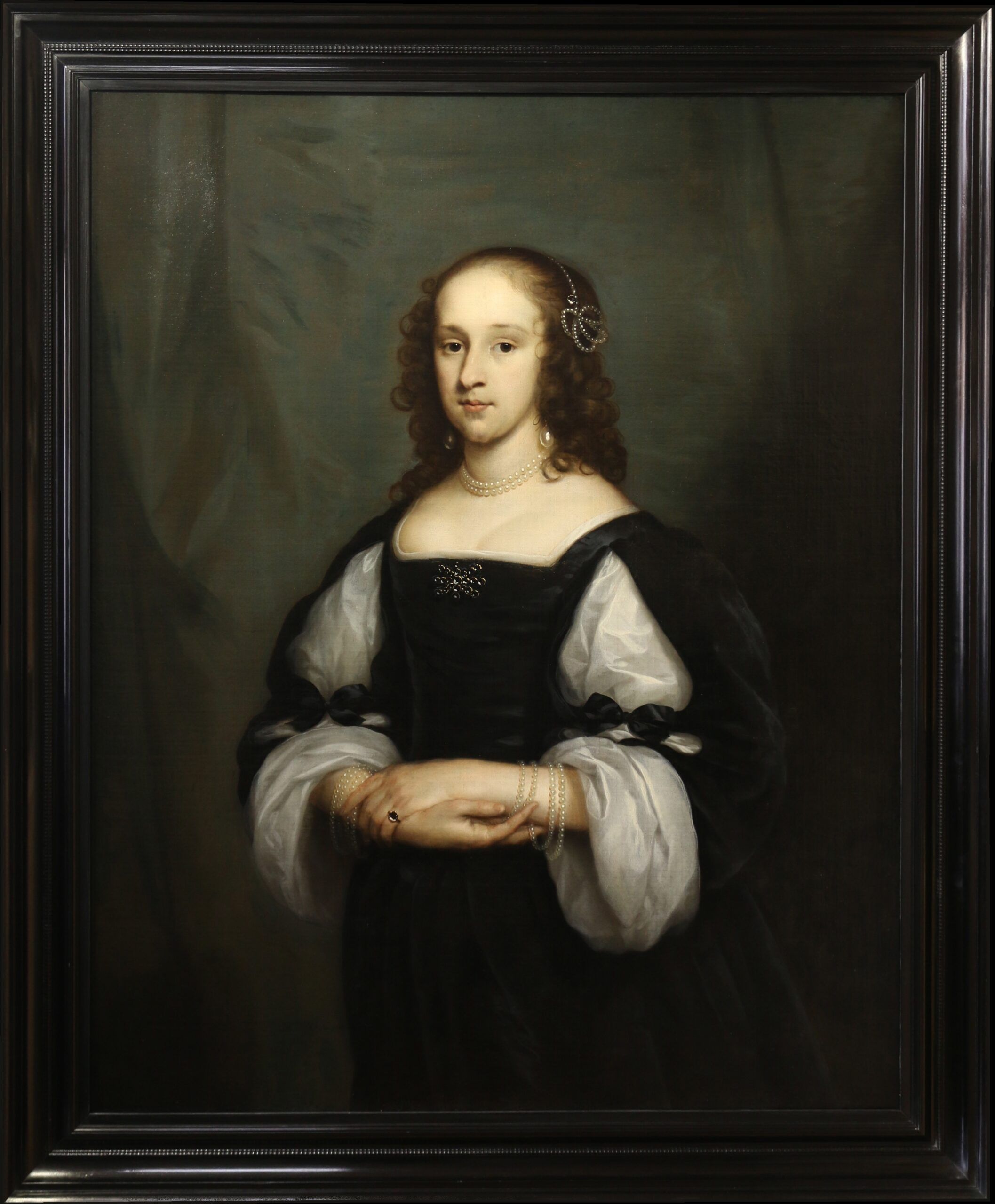
Portrait of a Young Girl
Oil on canvas
H. 113 cm. W. 91,4 cm.
PROVENANCE
Gallery of Princess Marie-Caroline of Bourbon-Two Sicilies, Duchess of Berry | Palazzo Ca’ Vendramin Calergi | Venice | As a portrait of Henrietta Maria of Bourdon, Queen of Charles I of England
Private collection of David P. Sellar Esq. | Paris | 1889
Private collection Jules Porgès | Paris
Collection of Kunsthandel Sedelmeyer | Paris | 1897 | As by Cornelis Jonson van Ceulen as ‘Portrait of a Lady, supposed to be Henrietta Maria, Queen of Charles I’ | The reverse of the pane is affixed with the Sedelmeyer wax seal
Private collection | Georgia | United States of America
LITERATURE
Sedelmeyer, Charles (1897). Illustrated Catalogue of the Fourth Series of 100 Paintings by Old Masters of the Dutch, Flemish, Italian, French, and English Schools. Paris, pp. 20-21, cat. nr. 13, illustrated
RECORD
The present picture is recorded at the RKD in The Hague under nr. 229185
CATALOGUE NOTE
This half-length portrait is a characteristic example of Cornelius Jonson van Ceulen’s portraits from the 1650s, in which he combines his typical subtle, liquid touch with the cool and unassuming restraint of Northern Dutch portraiture. In the fine portraits produced by the artist during his later Dutch period, Jonson van Ceulen brought his personal style to its greatest perfection. The portraits painted in the 1650s are considered to be among his finest, characterised by an elegance and grandeur reminiscent of Sir Anthony van Dyck, coupled with an expert rendering of physiognomy and facial expression. The Young Girl is depicted standing, at half-turned, looking toward the spectator. Employing a palette consisting predominantly of blacks and whites, Jonson van Ceulen creates wonderful shapes and textures. The Lady, dressed in the Dutch fashion of the mid 1650s, wears a black gown with a square neckline and wide cuffs. Her relatively sober attire is in correspondence with the Calvinist aversion of displaying wealth. She is standing in front of a typical idiosyncratic grey silk drapery. Jonson van Ceulen’s preference for plain, dark backgrounds makes this portrait all the more dramatic, enhancing the sitter’s pearly skin, soft hair and sober costume. In fact, the tout ensemble is black and white, from the hair decoration and other pearl jewellery to the dress itself. As said in the above, the present portrait displays the characteristics of his later Dutch portraits, painted in the 1650s. In fact, the present portrait show great similarities with Portrait of a unknow woman, oil on canvas, 1650, coll. Centraat Museum, Utrecht, inv.nr. 2485; see De Jonge, 1952, pp. 68-69, cat.nr. 159, ill. 60 and Hearn, 2026, pp. 55-57, ill. 47). Notable are the Young Girl’s hands, painted with superb virtuously, clearly demonstrating the influence of Van Dyck. Placed against the deep black of the Lady’s dress, Jonson van Ceulen applies delicate shadows where she folds her soft hands. Subtle highlights pick up the shimmering light on her skin and cuffs. With only a few strokes and a minimum of colours the artist effectively rendered both texture and volume.
PROVENANCE
According to the catalogue of Kunsthandel Sedelmeyer (1897, pp. 20-21) the inventory of the Picture Gallery of Princess Marie-Caroline of Bourbon-Two Sicilies, Duchess of Berry, housed at Palazzo Ca’ Vendramin Calergi in Venice, identified the sitter of the present portrait as Henrietta Maria of Bourdon, Queen Consort of England, Scotland and Ireland, to whom Marie-Caroline was related. Henrietta Maria of Bourdon, the youngest daughter of Henry IV of France, married Charles I in 1625. During the Civil War she was devoted to her husband’s cause and sold much of her jewellery and silver to fund his campaign. In 1644 she moved to France and was soon joined by members of the Royal court fleeing the war in England. Five years later her husband was convicted of treason and executed. After moving to France, she spent the rest of her life dressed in mourning and sought to promote her son, Charles, as king. Interesting as this historical identification may be, in comparison with know portraits, it appears to be unsustainable.
REFERENCE LITERATURE
Jonge, C.H. de (1952). Catalogus der Schilderijen. Utrecht: Centraal Museum, pp. 68-69, cat.nr. 159, ill. 60
Hearn, K. (2026). Cornelius Jonson van Ceulen. Een Engels-Nederlandse Meester uit de Gouden Eeuw. Zwolle: WBOOKS, pp. 55-57, ill. 47